
The Adler Legacy
Her inheritance is bait. Her bloodline is the trap.
Sophie Faulkner wants nothing more to do with the name von Adler. But when MI5 discovers that her dead father left millions in a Zurich bank account, Sophie becomes the only person who can unlock it.
The money was meant to fund the Ratlines — the secret escape routes carrying Nazi war criminals out of Europe. To expose them, Sophie must pose as the loyal heiress of a fallen Reich family and convince bankers, smugglers, priests, SS fugitives, and Allied spies that she wants the fortune for herself.
But everyone has plans for Sophie. The man who found her wants justice. The British and Americans want intelligence assets. The Nazis want their war chest. And if Sophie makes one mistake, she will disappear into the same shadows she was sent to destroy.
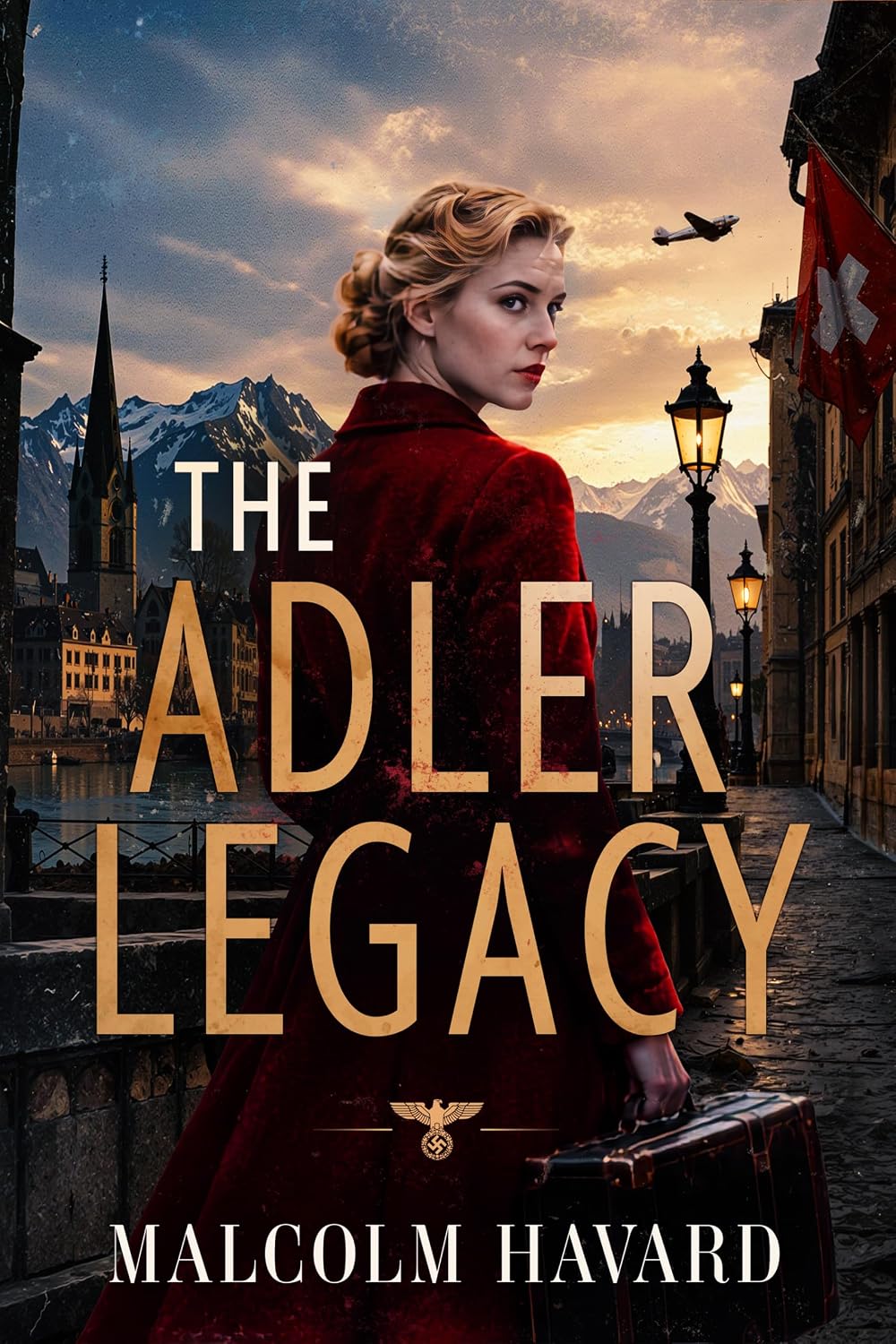
Look out for The Adler Legacy later this year!
It's based around The Cold War's Dark Compromise: The Historical Truth Behind The Ratlines
When the dust settled over Europe in May 1945, the Allied powers faced a rapidly shifting geopolitical landscape. The alliance between Western democracies and the Soviet Union disintegrated almost overnight, replaced by the paranoid, high-stakes standoff of the Cold War. In this climate of existential anxiety, pragmatic intelligence gathering frequently trumped moral reckoning.
The Ratlines: Escape Routes of the Reich
The term "Ratline" refers to the system of escape routes used by former Nazis, SS officers, and war criminals to flee Europe following World War II. These networks operated primarily through neutral corridors, leading to safe havens in South America—most notably Argentina, Brazil, and Chile—as well as the Middle East.
While some ratlines were informal networks organised by former SS officers (such as the famed ODESSA myth and genuine covert solidarity groups like Stille Hilfe), the most effective escape routes relied on institutional leverage:
- Vatican Connections and the Papal Relief Committee: Well-meaning humanitarian aid, combined with fierce anti-communist sentiment within elements of the Roman Catholic Church, created a cover for fugitive fascists. High-ranking clergy—most notoriously Bishop Alois Hudal in Rome and Father Krunoslav Draganović at the Pontifical Croatian College of San Girolamo—issued identity documents and travel visas.
- The Red Cross and Foreign Legations: Exploiting the post-war chaos, fugitives secured International Red Cross identity papers under aliases, which were then used to obtain foreign visas and passage from ports like Genoa and Trieste.
The CIC and the Gehlen Org: Intelligence Over Justice
As Soviet influence hardened across Eastern Europe, the US Army’s Counter Intelligence Corps (CIC) and British Military Intelligence prioritised containment over denazification. Former Nazi intelligence officers possessed operational knowledge, language skills, and existing networks behind what was becoming the Iron Curtain.
- The CIC’s Pragmatic Alliances: The CIC frequently turned a blind eye to the identities of former officers if they offered actionable intelligence. In several well-documented historical cases, the CIC directly facilitated the escape of high-ranking war criminals. Klaus Barbie, the notorious "Butcher of Lyon," was recruited by the CIC in 1947 to assist with anti-communist intelligence before being smuggled out to Bolivia via Draganović’s ratline in 1951 when French authorities demanded his extradition.
- Reinhard Gehlen and the CIA: General Reinhard Gehlen, former chief of the Wehrmacht’s Foreign Armies East (Fremde Heere Ost), surrendered to the Americans with microfilmed archives on the Soviet Union. Recognising his value, the US military funded the "Gehlen Organisation," an intelligence group composed largely of former Abwehr, SD, and Gestapo personnel. In 1955, this network was formally transformed into the Bundesnachrichtendienst (BND), West Germany’s official foreign intelligence agency, with CIA backing.
The Historical Reality Behind the Fiction
The central tragedy of the post-war era was that justice became negotiable. Men who had built and administered the machinery of totalitarianism found themselves rebranded as essential security assets in the new fight against global communism.
In The Ratlines, this historic moral compromise drives the tension: the terrifying realization that while the world celebrated the end of the Reich, the seeds of the Cold War were already protecting the very perpetrators who should have stood in the dock.